WONDERING
Twelve meditations on the ordinary and the astonishing
From Church Farm Cotterstock beside the River Nene
“You do not need to trek to a remote shrine in the Himalayas, enroll in expensive seminars, or convert to a new religion to connect with spirit. Your life is holy ground.”
- Mirabai Starr, Ordinary Mysticism
I want to tell you something before you begin wondering.
I do not believe that the sacred is somewhere you need to get to.
I believe — in my body, in my bones, in the way the morning light moves across the River Nene and something in me recognises it as kin — that you are already held within the divine life. That you have never, for a single moment of your existence, been anywhere else. That the longing you feel is not a sign of your distance from God but of God’s own longing, moving through you, as you.
This changes everything.
It means that these twelve meditations are not a ladder. They are not steps toward something you lack. They are invitations to remember what you have always been — what the river has always been, what the owl in the oak tree at dusk has always been, what the stone pressed into the earth of the river meadow has always been. The same sacred life, wearing different forms, recognising itself.
The mystics of every tradition have known this. Meister Eckhart wrote that the eye through which he sees God is the same eye through which God sees him. Rumi wrote of the reed crying not for a God beyond reach but for the reed bed it was cut from — which is to say, for the wholeness it already is. Hildegard knew that viriditas — the greening force of divine life — was not something that came from above and visited the earth. It was the earth’s own nature, pressing upward through every living thing.
And Mirabai Starr says it plainly: your life is holy ground. Not because you have consecrated it. Not because you have earned it. But because there is nowhere that is not.
I live on ground that has been understood as sacred for four thousand years. Druid, Roman, medieval Christian, and now this — whatever this is. An interfaith minister beside a river in Northamptonshire, pressing questions into the earth the way a labyrinth presses stones into soil. What I have learned, from this land and from the people who come to it and from the long slow teaching of my own unravelling and remaking, is this:
You are not a seeker. You are the sought.
You are not standing at the edge of the sacred, trying to get in. You are the sacred, standing at the edge of remembering.
These wonderings are simply a door, held open. You do not have to earn your way through. You were always already on both sides.
Come in. You are home.
Rev. Lizzie Ward
Church Farm, Cotterstock
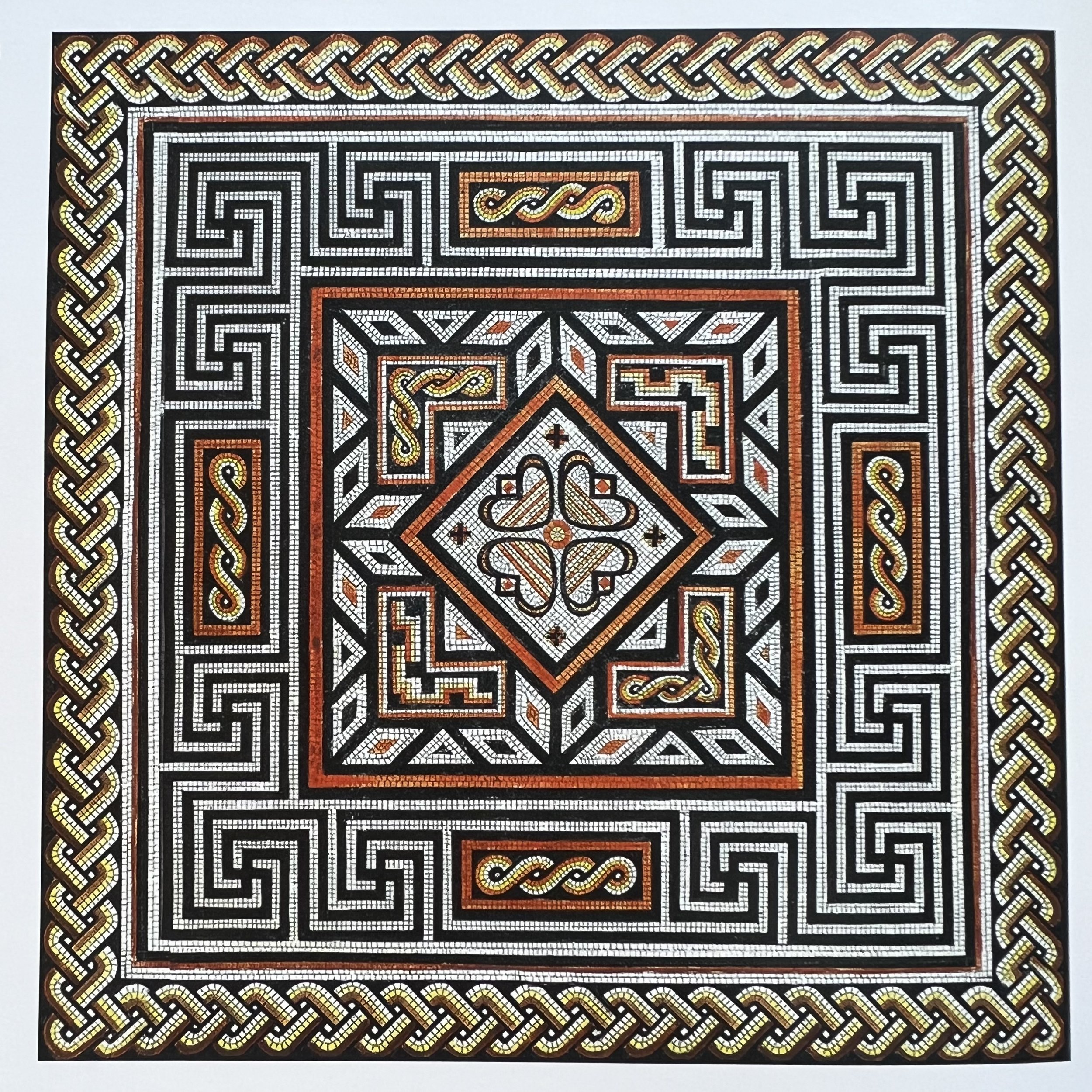
One: The Mosaic Beneath Your Feet
In 1736, a farmer’s plough struck something in the fields beyond my window. He didn’t know what it was at first — just a resistance, a catching, a sense that something below was pushing back.
What he found was a Roman mosaic floor. Intricate. Geometric. Beautiful. Made by hands that had been still for thirteen hundred years.
It had been there all along.
As it is with the divine life itself — not arriving when we are ready for it, but present before the first question was ever asked.
What if the most extraordinary thing about my life isn’t something I need to build or earn or become — but something already laid down, waiting for the right season to surface?
In the Jewish mystical tradition, the Shekinah — the feminine, dwelling presence of the Divine — is said to be hidden in the world, waiting to be found in unexpected places. Not in the grand gesture, but in the particular. The specific tile. The exact shade of orange placed next to ochre by someone whose name we will never know.
The mosaic didn’t announce itself. It waited for the plough.
What might be the plough in my life right now — the disruption, the difficulty, the unexpected turn — that is actually uncovering something?
The hands that made that floor lived here in community, walked here, ate and argued and loved here. They pressed small stones into wet mortar with their thumbs. They chose which colours to place beside which other colours. They made something beautiful in a field beside a villa and river, and then they were gone, and the earth covered it, and centuries later a farmer felt the resistance and stopped.
Someone always stops.
Am I paying attention to where my plough is catching?
What beauty might be just below the surface of the difficulty I am standing in right now? And what if that beauty is not waiting to be found — but waiting to be remembered as what I am?
The mosaic at Cotterstock still sleeps beneath the field beyond Church Farm. Some treasures are safest where they are.
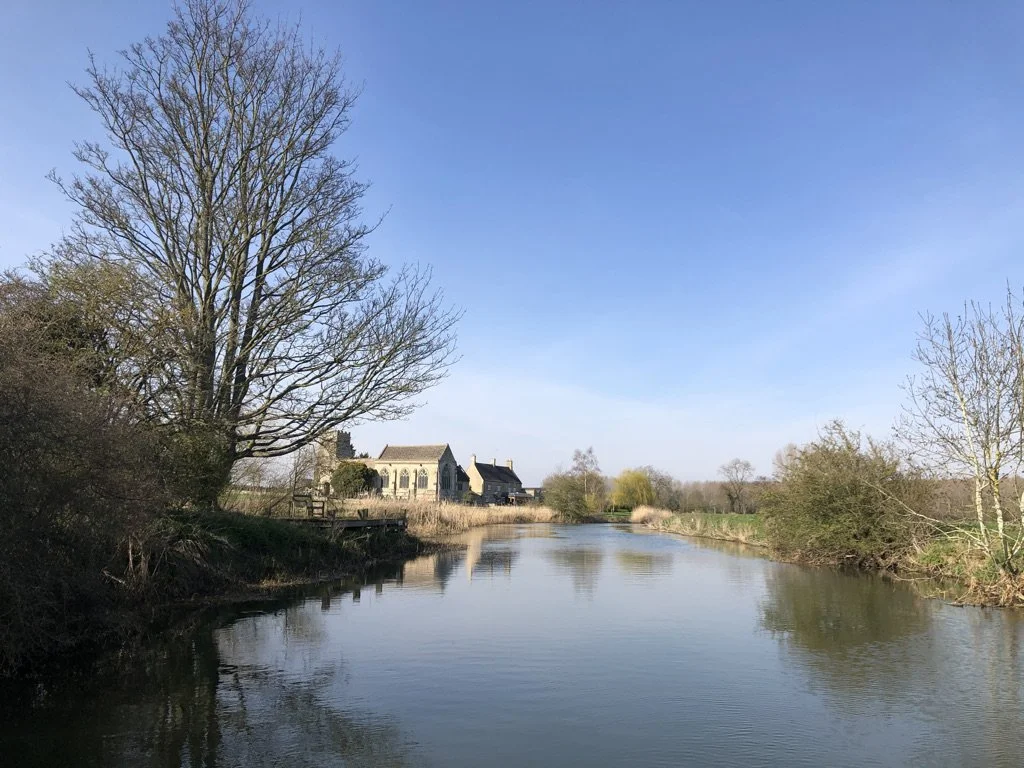
Two: What the River Knows
From my window I can see the River Nene. She has been flowing past Cotterstock since before there was a Cotterstock.
She has been flowing since before there were names for what she is — and what she is, is what I am. The same sacred life, wearing different forms. The Druids knew this. They did not worship the river. They recognised themselves in her.
She reflected the candlelight from the collegiate windows for two hundred years. She has received the grief of everyone who ever stood on her bank and wept, and she has kept moving, and she has carried everything to the sea.
Rivers don’t accumulate. They flow. Whatever they receive, they carry forward and release.
In the Taoist tradition, water is the great teacher — yielding, persistent, finding its way around every obstacle, wearing down stone not by force but by faithfulness. The highest good is like water, wrote Lao Tzu. It nourishes all things without striving.
What if this is not a metaphor? What if the water and I are not two things, one of which might teach the other — but one life, briefly wearing different forms, remembering itself through the meeting?
What might it feel like to live like a river?
Not to hold onto what has passed through me — the grief, the joy, the love that changed its shape, the losses that still have edges — but to carry it gently, and release it, and keep moving?
The river doesn’t distinguish between me standing on her bank and the pilgrim and the poet and the farmer and you. She simply receives.
What would it mean to be received like that — without judgement, without condition, without the need to be anything other than what I am, flowing?
What am I still carrying that the river — that I — might be willing to release?
I walk by the Nene most mornings. She is never the same twice. She is always just as she is.
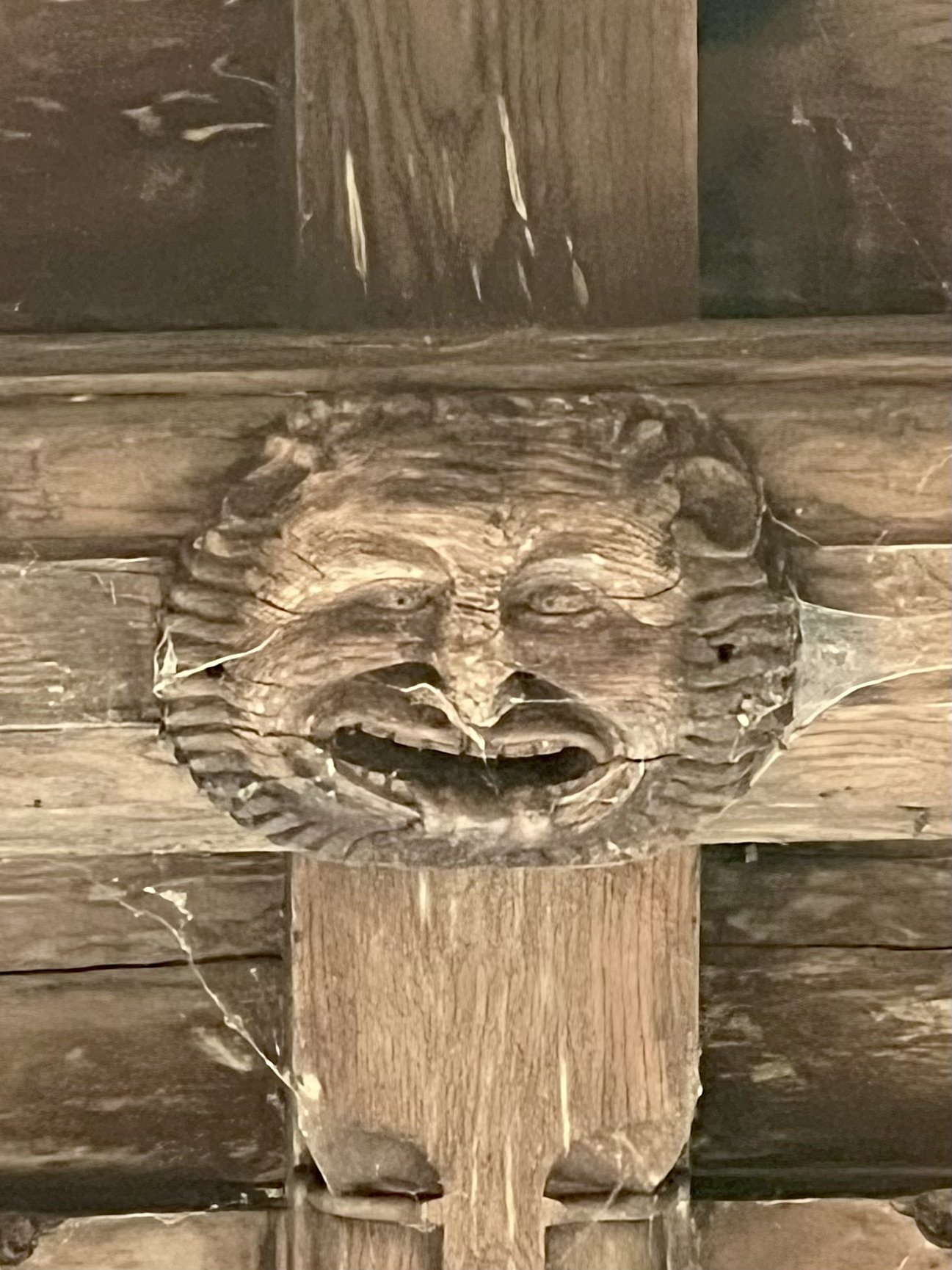
Three: The Green Man in the Chancel
It all begins with an idea.
He is up there in the roof of the medieval church next door, looking down at eight centuries of prayer. A man’s face. Leaves growing from his mouth. Foliage where words should be.
The people who carved him and placed him there were building a Christian church. They knew exactly what they were doing.
What if the deepest wisdom has never belonged to any single tradition — and the medieval builders knew it?
The Green Man appears in temples and churches, in Islamic art, in Celtic stonework and Renaissance manuscripts. Nobody owns him. Nobody can quite explain him. He keeps turning up, leaf-tongued and watchful, wherever humans gather to reach toward something larger than themselves. He is the sacred masculine as nature knows it — not dominating, not conquering, but rooted, growing, seasonally surrendering.
What in my own life keeps returning — the thing I have tried to be too sophisticated for, the longing I have filed under irrational — that might actually be trying to tell me something true?
What in me is trying to come back?
What have I been too stubborn to let return?
The Green Man doesn’t ask me to choose between the sacred traditions. He sits in the roof of a building built for one religion and grins across all of them. He has seen them all come and go. He is still here.
What if I am allowed to hold more than one kind of knowing at once?
What if the deeper question is not which tradition to hold — but whether I am willing to remember that the knowing itself, in me, is the same knowing that carved him into the roof, that pressed the Roman mosaic into the soil, that moves the river, that woke me this morning? One life. One consciousness. Many forms of its own astonishment at itself.
I pass beneath him sometimes when I visit the building. He seems entirely amused by all of it. I find that quietly heartening.
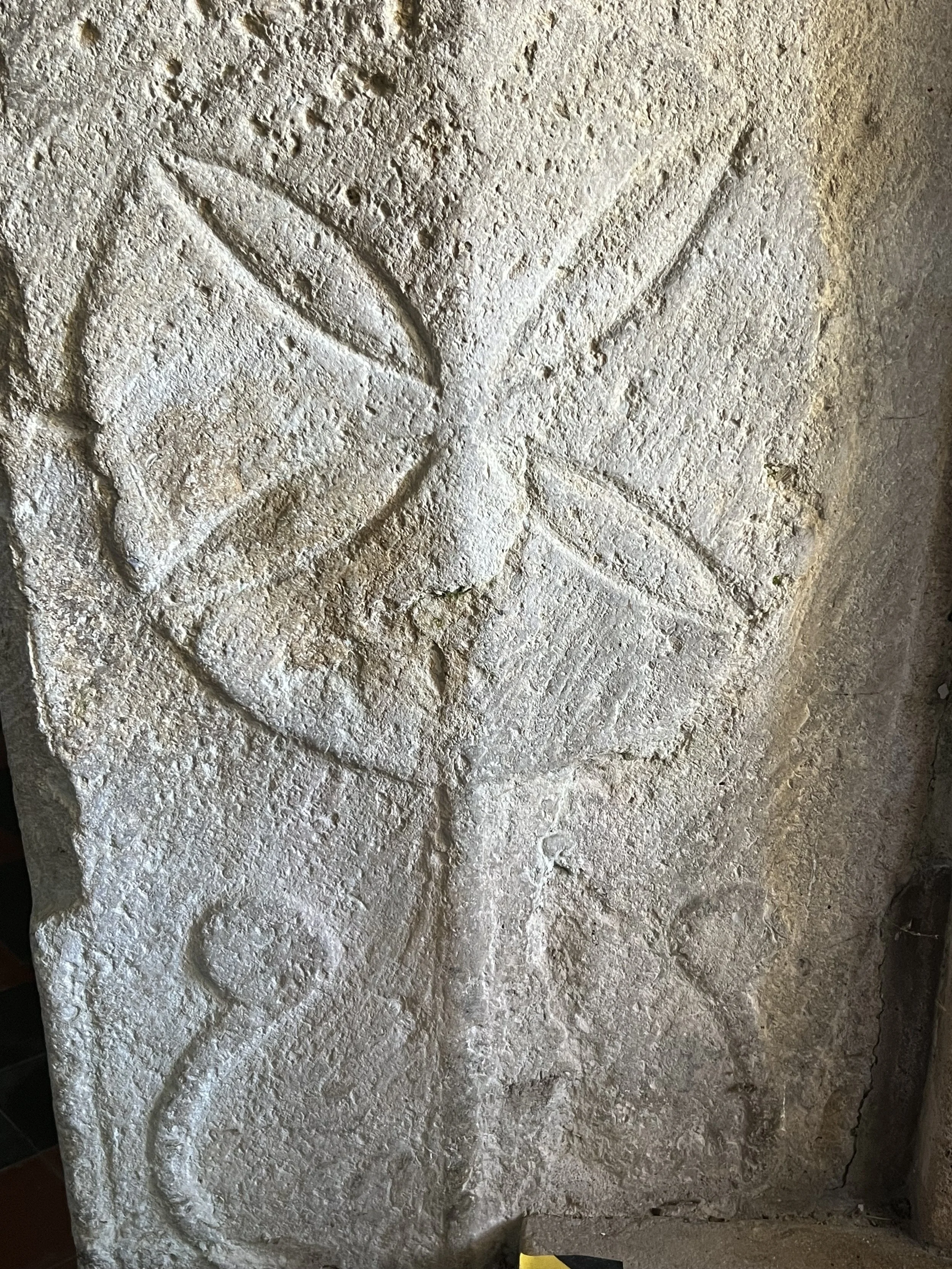
Four: The Fisherman’s Cross
It all begins with an idea.
The ancient church here beside Church Farm is dedicated to a fisherman.
A man who went out before dawn. Who waited. Who read the water. Who knew that what he was looking for moved beneath the surface.
Andrew was the one who said come and see. Not I will explain. Not let me convince you. Just — come. Look. Decide for yourself. Whatever tradition we come from, that invitation is one I recognise as true. It is the spirit of the Sufi teacher who answers a question with a story, the Zen master who responds with silence, the grandmother who simply makes tea.
He died on an X. A saltire. A cross that tips sideways, opens outward, refuses to point only up or only down. What if a cross could mean here, and here, and here, and here — four directions, four possibilities, the whole horizon held? Many traditions know this shape: the medicine wheel, the mandala’s four quadrants, the four sacred directions honoured in indigenous ceremony the world over. The cross as compass, not cage.
And perhaps what all of these symbols are pointing toward is not a direction at all — but a centre. The place where all four arms meet. The still point from which all directions are equally possible. That centre is not somewhere I travel to. Awakened consciousness knows it as the ground I am standing on, right now, in whatever field I find myself.
In the river meadow beside this church, a few steps from where his name has been spoken across eight centuries, I built a labyrinth whose foundational geometry is that same crossed circle. It is sleeping now, tucked under grass and good soil. But the pattern is there.
Was that a coincidence?
What moves beneath the surface of my life right now?
What might I catch, if I let myself cast a little further out?
The river runs past the old stone church. The fish are still there. Some things do not change.
Five: The Fiery Life
It all begins with an idea.
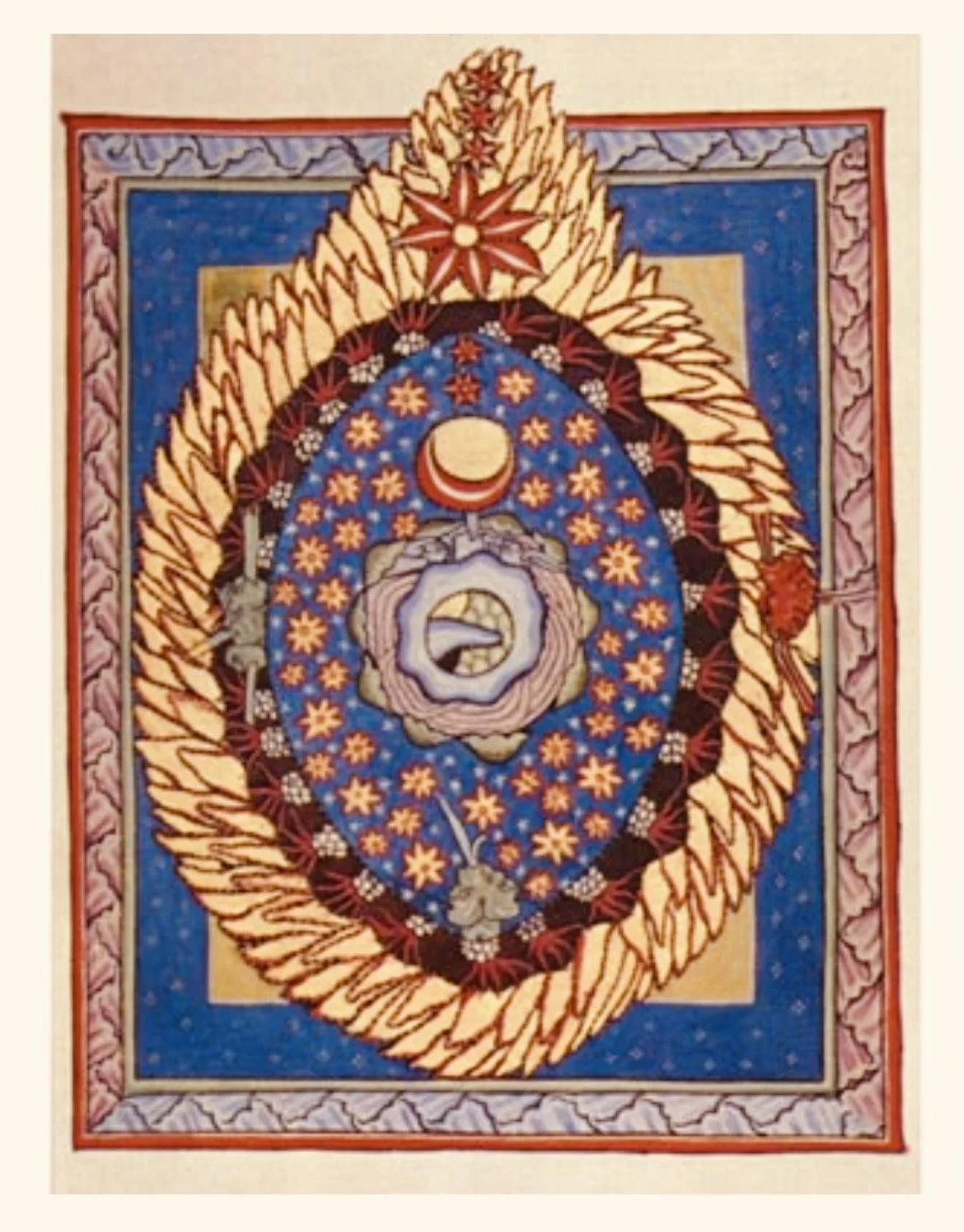
Hildegard of Bingen began writing her first great vision at the age of forty-three.
Not because she had finally found the time, or the courage, or the right circumstances. But because the pressure of what she carried had grown too great to hold any longer. She described it as veins and marrow filled with powers she had lacked in childhood and youth. A voice that said: cry out and write.
Hildegard was a Benedictine abbess in 12th-century Germany. She was a composer, a healer, a naturalist, a theologian, a letter-writer to popes and kings, a founder of two monasteries. She composed over seventy pieces of music. She wrote her greatest visionary work — the Liber Divinorum Operum, the Book of Divine Works — between the ages of sixty-five and seventy-five.
She called her central concept viriditas — greenness. The living, fecund, greening force of the divine moving through all created things. Not a metaphor. A reality she could see and feel and name.
The soul is a breath of living spirit that permeates the entire body to give it life. Just so, the breath of the air makes the earth fruitful. Thus the air is the soul of the earth, moistening it, greening it.
She was not describing something she had found. She was describing what she had remembered. That the divine life and her own life were not two different things that had come into relationship. They had always been one thing, briefly believing itself to be separate — and then, in a moment of grace, remembering.
What if the sacred energy moving through my life right now is not diminishing — but greening?
What if what feels like slowing down is actually deepening?
Hildegard described herself with an image so simple it stops the breath: Thus am I — a feather on the breath of God. Not grasping. Not striving. Not proving. Simply available. Carried by something infinitely larger than her own effort, to exactly where she needed to be.
She was eighty-one years old when she died. She was still writing.
What am I still here to become?
What in me is not yet finished — not because I have failed to complete it, but because it is still being made?
What would it feel like to stop pushing the work forward, and let the breath carry me?
Viriditas. The greening force. It does not retire. It does not diminish with age. It is what happens when a life roots deeply enough to become something even it did not expect.
Six: What John Clare Found in the Fields
It all begins with an idea.
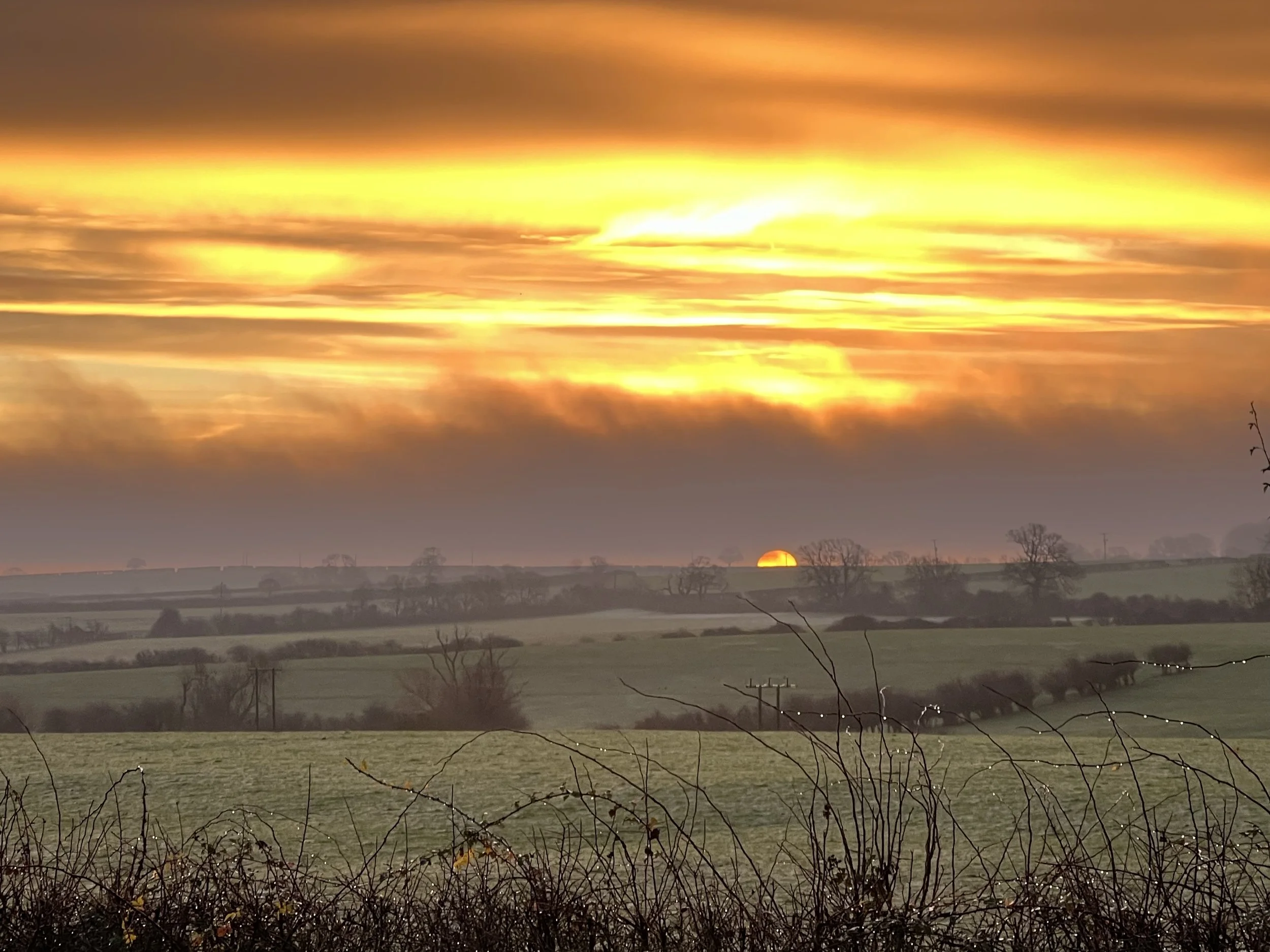
John Clare walked this landscape. These meadows, this river, this particular quality of Northamptonshire light falling sideways across water in the early morning — he knew all of it on foot, in all weathers, across a whole life.
He was a farm labourer. He worked with his hands in the same soil that covers Roman mosaics. He had almost no formal education. He wrote his poems on scraps of paper and hid them in holes in walls.
He left us one instruction, which is also a kind of question:
I found the poems in the fields, and only wrote them down.
The Buddhist teacher Thich Nhat Hanh called it interbeing — the recognition that everything is already connected, already alive, already speaking, if we slow down enough to listen. The flower contains the cloud. The field contains the poem. The ordinary Tuesday contains everything.
And beneath even interbeing — beneath the beautiful teaching that the flower contains the cloud — there is something more intimate still. Not that all things are connected. But that all things are one thing. That what looks through my eyes at this field is the same awareness that animates the yellowhammer in its nest and the grass bending in the wind and the light on the water. Awakened consciousness does not find beauty in the world. It recognises itself.
What if the extraordinary is not somewhere else?
What if it is here — in this field, this morning, this body, this ordinary day that I am already in the middle of and have not yet decided to pay attention to?
Clare noticed things that nobody else was bothering to notice. Not because he had special equipment. Because he looked. Because he went slowly. Because he understood that a yellowhammer’s nest or a stand of autumn grass or the light on the Nene at dawn was not a lesser subject than the grand themes of Literature with a capital L.
What if my life — the actual texture of it, the unremarkable Tuesday of it — contains more than I have given it credit for?
What is already here, in the field I am standing in, that is waiting to be written down?
What poem am I walking past every day — and what if I am not the one who writes it, but the one in whom it is already written?
The fields around Cotterstock have been generating astonishment for centuries. I can confirm: they have not run out.
Seven: The Barn Owl at Dusk
There are moments that announce themselves.
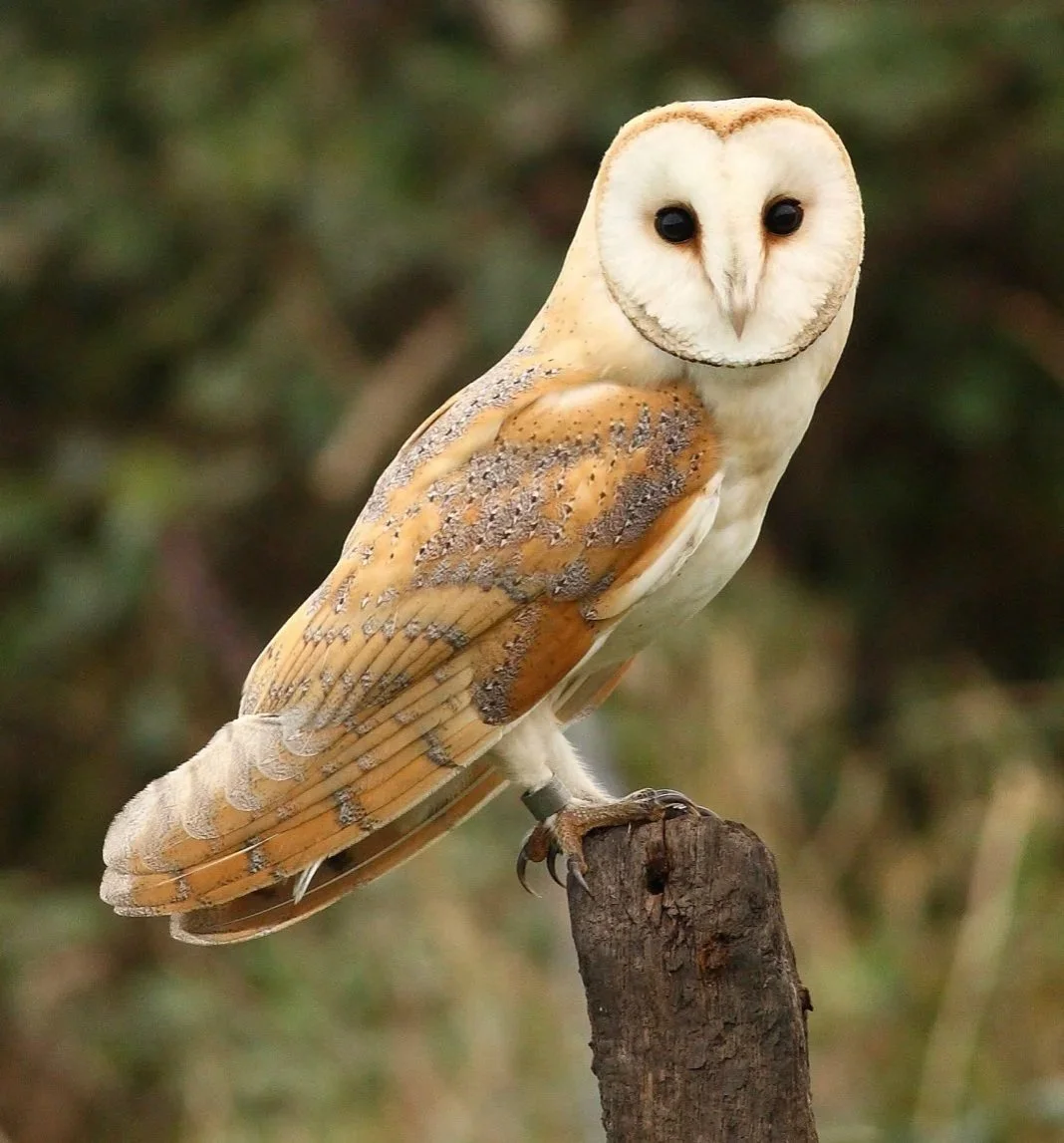
Not loudly. Not with fanfare. I was in the river meadow at Church Farm on the evening I first broke ground on the labyrinth. The Cold Full Moon was rising. And a barn owl landed in the oak tree at the edge of the meadow and simply watched.
You could call it coincidence. Many people do.
But what is coincidence, really? It is two things happening together that we have not yet found the language to connect. The Celtic tradition has a phrase for places and moments where the membrane between the visible and invisible grows thin: thin places. The owl arrived in a thin moment. I knew it then. I know it still.
Have I had a moment like this — a moment that felt, unmistakably, like the awareness that lives in me recognised itself in the world around me? Not something paying attention from outside. But the one consciousness, briefly awake in two forms at once.
The owl didn’t explain itself. It landed, it watched, it left.
And I understood, standing there, that the owl and I were not two separate creatures, one of whom had been sent to witness the other. We were one life, briefly looking at itself. The recognition was not mine alone. It moved in both directions simultaneously.
What if presence — simple, unhurried, luminous presence — is one of the most powerful forces available to me?
What if the barn owl is not sent from somewhere else — but is the universe itself, the same life that I am, briefly wearing feathers, arriving in the form my open heart most needed to recognise?
And what if the owl is not always a bird — but sometimes a conversation, a piece of music, a stranger’s face, a line in a book that lands somewhere precise and unexpected inside me?
What has landed, lately, that I haven’t yet let matter?
I have never forgotten that owl. It knew something about what I was beginning. I think it still does.
Eight: What the Labyrinth Knows
The first thing a labyrinth can do is confuse me.
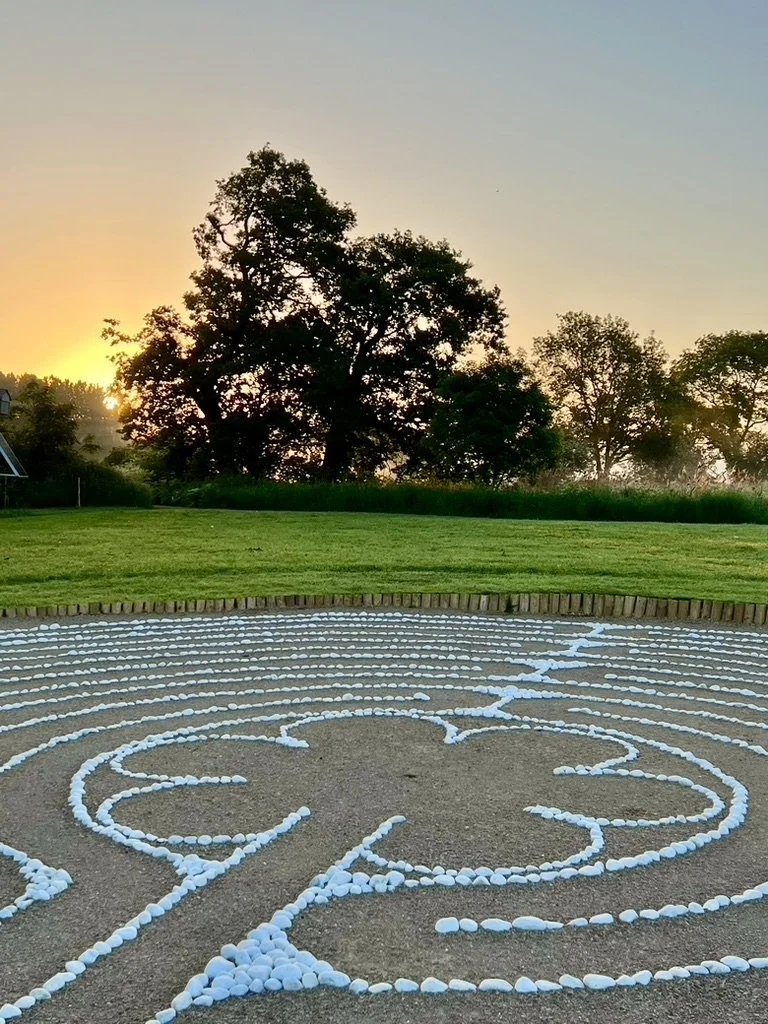
I know this because I built one, in the river meadow to the north-east of the ancient church that neighbours Church Farm, and I have walked it in every season and every state of mind available to a human being.
I step onto the path expecting to move toward the centre, and it takes me to the edge. I follow it anyway, and it circles back, and just when the centre seems close it carries me to the far side of the whole thing, and I begin to wonder if I have misunderstood something.
I have not misunderstood. This is exactly what it does.
The Sufi poets understood this. Rumi’s reed cries from separation before it can sing of union. The path to the Beloved is never direct — it winds through the self, through loss, through the dissolution of everything the ego thought it needed. Out beyond ideas of wrongdoing and rightdoing, there is a field. I’ll meet you there. The labyrinth knows that field. It is what waits at the centre.
The labyrinth has no dead ends. I cannot get lost in it. Every step, however circuitous, is part of the route. There is only one path, and it goes all the way in and all the way out, and the same path does both.
What if that is also true of my life?
What if the detour is not a mistake — but the path itself?
What if the things I am most longing for cannot be reached by trying harder — only by walking faithfully?
The labyrinth teaches this in the body. I cannot think my way to the centre. I cannot will my way there. I simply walk, faithfully, and at some point the thinking mind grows quiet, and what remains is the awareness that was always already there — open, unhurried, home. Not a self that has arrived somewhere. Just awareness, recognising itself. The mystics call this the ground of the soul. The labyrinth calls it the centre. They are the same place. I have always lived there.
What if I am closer to the centre than the path currently makes it appear?
The labyrinth doesn’t reward the urgent. It rewards the willing. I learned that slowly. I am still learning it.
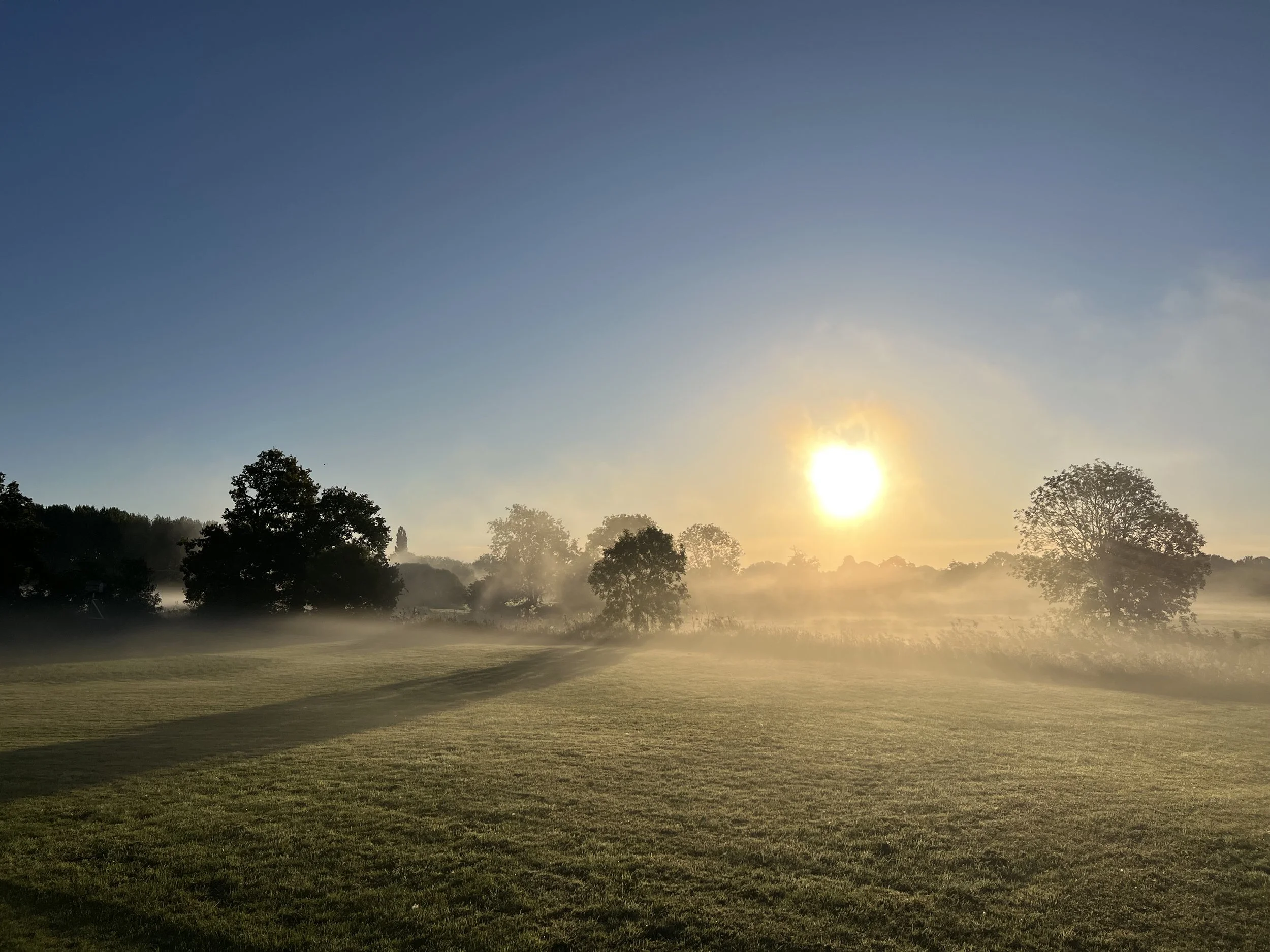
Nine: The Buried Treasure
In 2025, something shifted.
A strong inner knowing came — quiet but insistent, the kind I have learned to trust — that the labyrinth needed to rest. To be covered, held, tucked in. Rich soil and grass seed were laid over the path, and the river meadow was allowed to return to itself.
This spring, you would not know the labyrinth was there. The grass is whole and green and beautiful. And beneath it, every single stone is undisturbed — each one pressed into place by hand, still holding the pattern.
The path is there. It has not been lost. It is being held.
And this is what the mystics know about the divine life itself — that it does not abandon what it loves. That the sacred presence which holds the labyrinth beneath the grass is the same sacred presence that holds me in my own winters. Not from outside. From within. Because I am not held by God the way a stone is held in a hand. I am held the way the ocean holds a wave — entirely, from the inside, as its own expression.
The mystics of many paths know this season: the dark night that precedes the dawn, the silence before the word, the winter that the seed must pass through before it can become anything at all. In the contemplative traditions it is called emptying — the letting go that paradoxically creates more space for what is sacred. My body knew it before my mind had words for it.
What if withdrawal is not the same as abandonment?
What if the most loving thing I can sometimes do — for something, for someone, for some tender part of myself — is to cover it gently and let it rest?
What in my life is not gone — but resting?
What have I covered with shame that might actually be sleeping under love?
What pattern in me is being held, intact, beneath a surface that looks like nothing is happening?
The labyrinth will open again in its own time. I am in no hurry. Some things know when they are ready.
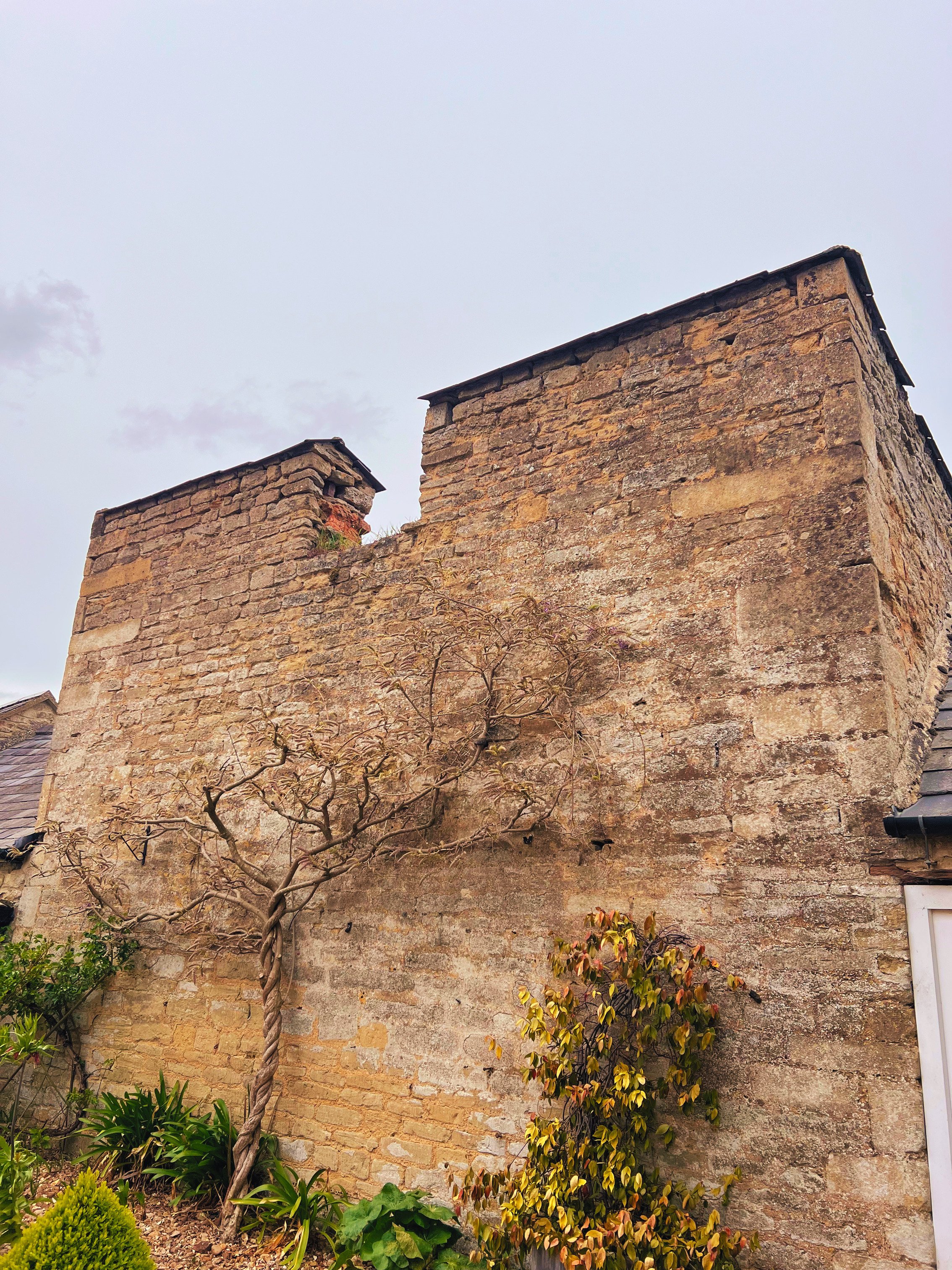
Ten: The Dovecote
At Church Farm there was a dovecote.
A dovecote is one of the quietest miracles in the English landscape. A place built entirely for the purpose of welcoming return. Every opening in its walls an invitation. Every nesting box an act of faith that something will come back.
The dove has been a sacred bird across many of the world’s traditions — in Hebrew scripture she brings the olive branch, the sign that the waters are receding and it is safe to return. In the Goddess traditions she is the messenger of Aphrodite, of love, of the deep feminine wisdom that knows when to move and when to be still. Across nearly every tradition, she carries the same message: it is safe now. You can come home.
What calls me back?
Not what I think should call me back. Not what I have told myself is home. But what actually, in the body, in the chest, in the place beneath words — pulls me?
The dove does not reason its way home. It navigates by something so fundamental it has no name in our language. It simply knows.
Because it has never, not once, been separate from what it is returning to. The homing instinct is not navigation. It is the recognition, in the body, of the truth the mystics speak — that there is nowhere that is not home. That the divine life from which I imagine myself to be exiled is the very life I am living, right now, in this body, on this ground.
What do I simply know — before the argument, before the analysis, before the careful weighing of all reasonable options?
A dovecote is also an act of humility. I cannot make the dove return. I can only make the place worth returning to. I can only tend it, keep it open, and trust.
What in my life am I trying to force home that might simply need the door held open?
What would it mean to make myself — my life, my practice, my home — a place worth returning to?
The doves are gone now. But the dovecote still stands. And I think about what it knew, every time I open a door for someone.
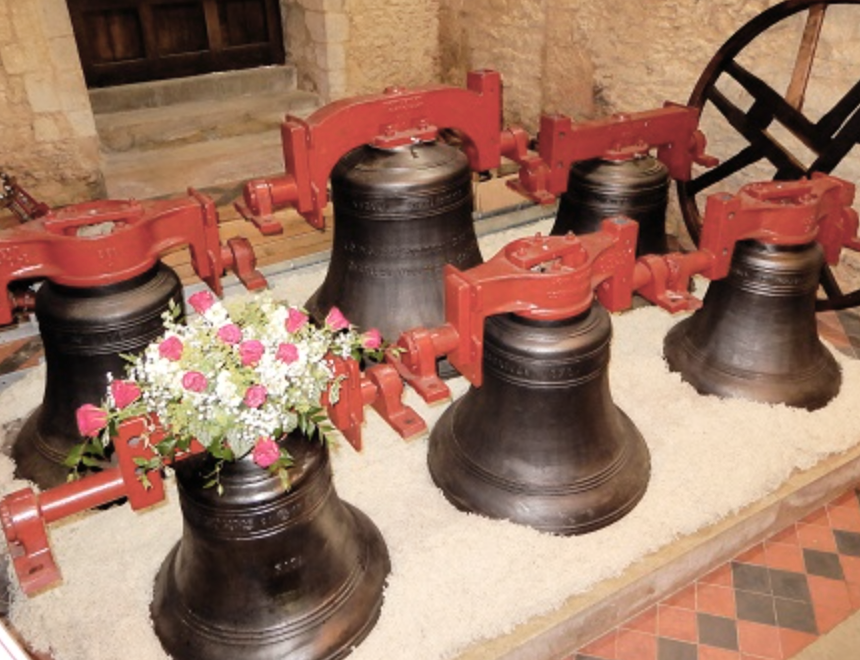
Eleven: What the Bells Know
On certain mornings the bells of the old stone church ring across Cotterstock and the sound moves through the air and through the water and through the stone and through whatever I happen to be doing, and I feel it before I hear it.
That is not a metaphor. Sound is vibration. Vibration is physical. The bell doesn’t only make noise — it moves the air, which moves the body, which moves something inside the body that the mind has no jurisdiction over.
I don’t need to share the church’s creed to receive that gift. The sound comes freely, over the wall, into whatever I am doing. It is one of the things I love most about living here.
People have known the healing power of sound for a very long time. Longer than any organised religion. The shamanic drum — perhaps the oldest healing technology on earth, its heartbeat rhythm calibrated to shift brainwave states and carry the spirit-traveller across thresholds — has known it for fifty thousand years. The Tibetan singing bowl, the didgeridoo, the Hindu nada brahma — the teaching that the entire universe arose from sound, that vibration is the first language of creation. The Gregorian chant. The communal hum of a choir who have found each other in a room. The resonance of a hundred voices in a Beautiful Chorus gathering, discovering together that they are more than the sum of their parts.
All of it working with the same ancient knowledge: that the body can be reached through frequency when words have run out.
And perhaps this is because the body already knows what the mind has forgotten — that it is not separate from the vibration that moves through it. That sound does not enter the body from outside. It meets, in the body, the same resonance that is already there. Awakened consciousness knows this as love recognising love. The bell rings, and something in me rings back, because I am made of the same sacred substance.
What if healing is sometimes less about understanding and more about resonance?
What if some of what I am carrying is not a problem to be solved but a frequency to be shifted?
The bells of Cotterstock have been rung across grief and celebration, through plague and harvest, through dissolution and restoration and the long ordinary Sundays in between. They have rung for the dead. They have rung for the newborn. They have rung on days when nobody particularly felt like ringing them, because that is also what bells are for — to mark time, to say we are still here, to send something out into the air that asks nothing in return.
What if I allowed myself to be moved today — not managed, not processed, not understood, but simply moved?
What frequency does my body most need right now — and where might I find it?
What would it mean to let the sound all the way in?
The bells do not ring to be agreed with. They ring because ringing is what they are. Whatever I think about the building they ring from, I am grateful for that.
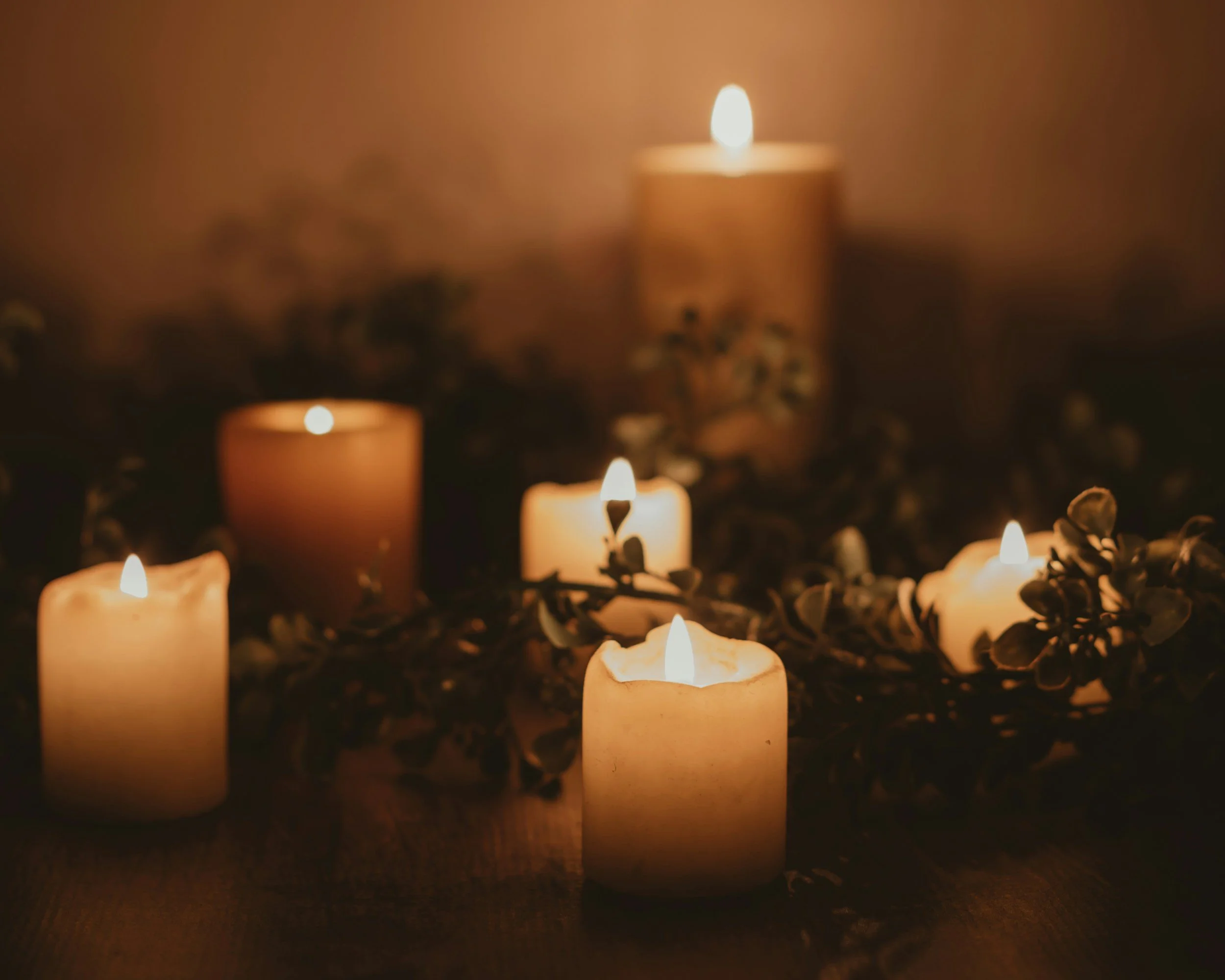
Twelve: The Hour of Compline
Every evening for nearly two hundred years, the chaplains of Cotterstock’s collegiate gathered in the chancel just across the wall from where I now live, to sing Compline. The last office of the day. The candles. The darkness pressing at the windows. Fifteen voices finding each other in the stone.
Then they slept. All of them, in a common dormitory, without division. And in the morning they began again.
I don’t follow their liturgy. But I have learned something from them nonetheless — something that many traditions know and that our busy, productivity-obsessed world has almost entirely forgotten.
What if the way I end things matters as much as the way I begin them?
Not just days — but conversations, relationships, chapters of a life. What if there is an art to the ending, and I have never quite been taught it?
In the Navajo tradition, the evening blessing way speaks of walking in beauty — hózhó — returning to balance and harmony as the light fades. In Jewish practice, Shabbat is not an absence but a presence — a bride arriving, a queen welcomed, rest as the holiest act of the week. Across many traditions, the great feminine wisdom has always known this: that ending, rest, and darkness are not the enemy of the sacred. They are part of its breath.
What would it mean to end my day with intention — not with a list of what I failed to do, but with a quiet, deliberate placing-down of everything I carried?
What am I still carrying from today that was never mine to keep overnight?
What would I sound like, if I let myself sing the small song of this one ordinary day — not perfectly, but truly?
What would it feel like to simply lie down, and let the darkness be kind?
I live beside a chancel that has held more endings than anyone can count. I don’t worship there. But I am grateful it exists — that across the wall, eight centuries of people found their way to the end of the day and lay down together in the dark without division. And I have come to understand, in the long schooling of this ground, that the darkness they lay down into was not an absence. It was the same sacred life, wearing its night form. Holding them, as it holds all things — from the inside, as its own expression, without ever having let go.
Endings, it turns out, are not the opposite of sacred. They may be the most sacred thing of all.
This is where I live. This is what I am learning. You are welcome here.